

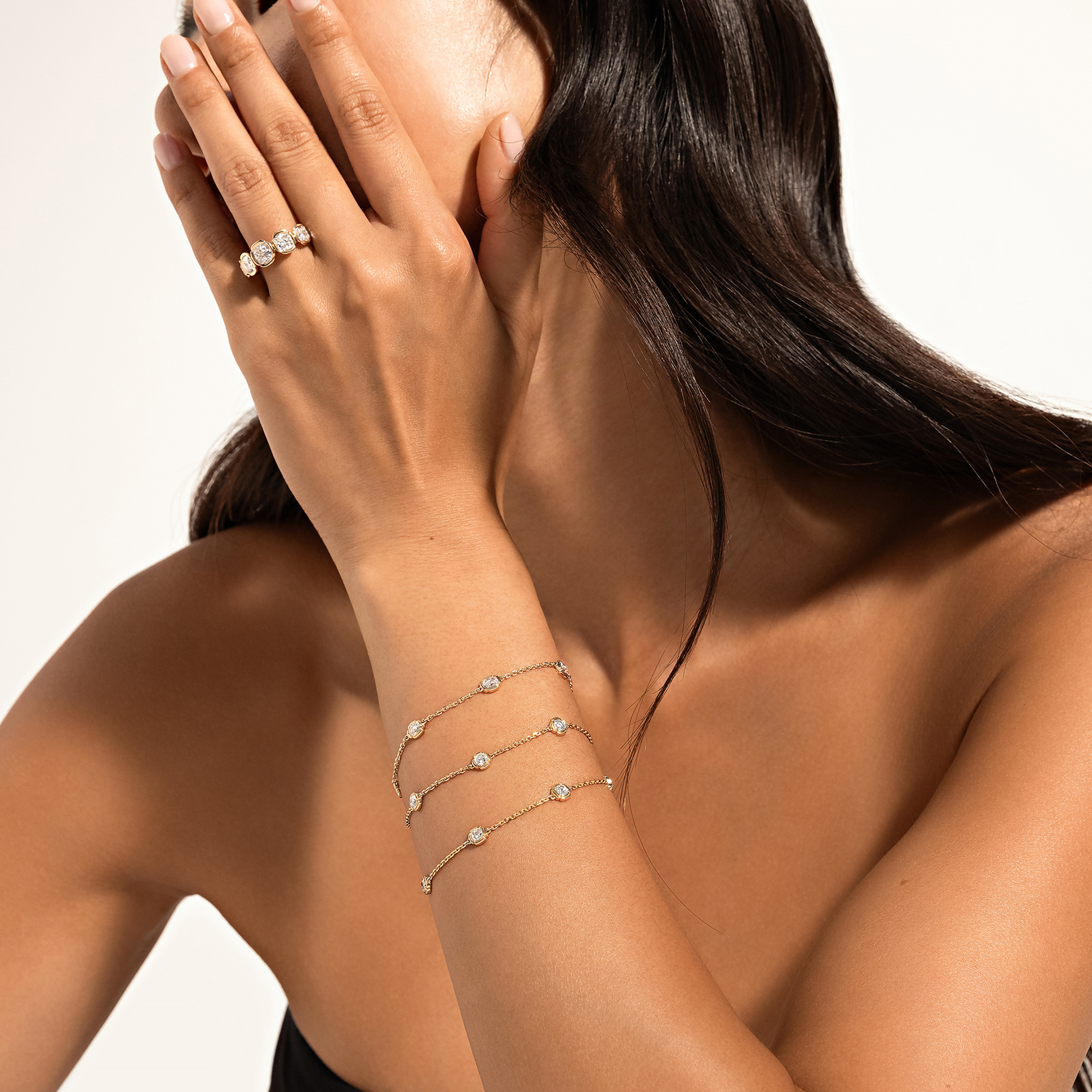
The appeal of fine jewelry has always extended beyond the materials used to make it. A diamond may draw attention, but its setting, proportions, and relationship with the surrounding metal determine how the finished piece looks and feels. Today, buyers are paying closer attention to these design decisions, looking for jewelry that reflects their personal style rather than simply following established conventions.
This shift is particularly visible in lab-grown diamond jewelry. With a wide range of diamond shapes, settings, sizes, and silhouettes to explore, the design of a piece plays an important role in distinguishing one creation from another. The focus is no longer just on the diamond itself, but on how it becomes part of a complete composition.
Jean Dousset approaches its jewelry through this relationship between diamond selection, craftsmanship, and design. The brand selects only the top 0.1% of lab-grown diamonds for its collections, with each piece shaped around the way its diamonds and settings work together. This philosophy extends beyond engagement rings to necklaces, where proportions, setting styles, and metalwork can transform a familiar design into something distinctive.
1. The Setting Shapes the Character of the Diamond
A diamond’s appearance is influenced by more than its shape or size. The setting determines how the diamond is framed, how much of it remains visible, and how it relates to the rest of the jewelry.
This is particularly noticeable in necklaces. A pendant with a simple bezel setting creates a different impression from one held by prongs or surrounded by pavé. The diamond may be similar, but the metalwork changes the overall character of the piece.
Jean Dousset’s Dorée collection illustrates how the setting can become part of the design itself. Rather than serving only as a structure to hold the diamond, the gold framework contributes to the composition, giving the jewelry its distinctive shape and identity.
This approach is one reason design matters when choosing lab diamond necklaces. The setting is not merely a practical detail; it helps determine whether a piece feels minimal, sculptural, or more decorative.
2. Design Gives Familiar Jewelry a Distinct Identity
Not every piece of luxury jewelry needs an unusual shape to feel distinctive. Sometimes, the difference comes from how familiar forms are interpreted.
A pendant, for example, can be transformed through its outline, the placement of its diamond, or the way the metal surrounds it. Similarly, a tennis necklace can maintain its recognisable structure while using different proportions to create a different effect.
Jean Dousset’s necklace collection includes both continuous diamond designs and pendant styles, offering different approaches to wearing lab-grown diamonds. The Dorée designs focus on the relationship between the gold structure and the diamond, while the Olivia Tennis Necklace creates its identity through the arrangement of diamonds along the neckline.
These differences matter when choosing diamond necklaces because the most suitable design depends on how the jewelry will be worn and what the wearer wants it to express.
3. Craftsmanship Makes Design Work in Practice
A strong design must also translate successfully into a finished piece. The settings need to be executed accurately, the metalwork should be well finished, and the proportions must work together from different viewing angles.
In a necklace, these details influence more than appearance. The way the diamonds are secured, how the necklace follows the neckline, and how the clasp integrates with the design all contribute to the overall experience.
For diamond necklaces for women, this relationship between craftsmanship and design is especially important because necklaces move with the wearer. A piece needs to look cohesive when laid flat and maintain its intended appearance when worn.
Jean Dousset’s focus on craftsmanship reflects the importance of these practical details. The goal is to create jewelry in which the construction supports the design rather than distracting from it.
4. Metal Choice Is Part of the Design
The metal surrounding a diamond affects the overall appearance of a necklace. Yellow gold creates warmth and contrast, while white gold and platinum offer a cooler look. Rose gold provides another option for those who prefer a warmer tone.
The choice can also change how a setting is perceived. A polished gold frame may become a visible part of the design, while a white metal setting can create a more continuous visual relationship with the diamond.
Jean Dousset offers different metal options across its necklace designs, allowing buyers to choose according to their personal preferences and existing jewelry.
When selecting lab diamond necklaces, it is useful to consider the metal alongside the diamond rather than treating it as a finishing decision. Both contribute to the character of the final piece.
5. Versatility Begins With Thoughtful Design
Jewelry is increasingly chosen for how easily it fits into different parts of a wardrobe. A necklace might be worn with a simple shirt during the day, layered with another chain at the weekend, or paired with formal clothing for an evening occasion.
Design influences how easily a piece can move between these settings. A pendant may offer flexibility because it creates a single focal point, while a tennis necklace provides a continuous line of diamonds that can stand on its own or work as part of a layered look.
The Olivia Tennis Necklace and the Dorée pendants offer different ways to approach this versatility. One creates a continuous diamond line, while the other uses the relationship between the diamond and gold structure to create a more focused design.
For women building a jewelry collection, these differences make it easier to select pieces that serve different purposes without feeling interchangeable.
Design Is What Brings the Pieces Together
The growing interest in lab-grown diamond jewelry has placed greater attention on the many ways diamonds can be incorporated into fine jewelry. But the diamond alone does not determine the character of a finished piece. The setting, proportions, metal, and craftsmanship all influence how it looks and feels.
Jean Dousset’s necklace designs illustrate this through different interpretations of familiar styles. The Olivia Tennis Necklace demonstrates the importance of proportion across a continuous line of diamonds, while Dorée shows how the gold structure can become an integral part of the design.
For anyone exploring diamond necklaces, these details are worth examining alongside diamond quality. They help distinguish a piece that simply incorporates diamonds from one in which every part contributes to a unified design.
Ultimately, design matters because it gives jewelry its identity. It determines how a necklace sits, how its diamonds are presented, and how naturally it fits into the wearer’s personal style. When craftsmanship and design work together, lab-grown diamond jewelry becomes more than a collection of materials. It becomes a finished piece with a distinctive character of its own.
